.svg)

A strategic framework to unlock runway and terminal capacity while securing long-term operational resilience for one of India’s fastest-growing aviation hubs.
Value Delivered
Project Overview
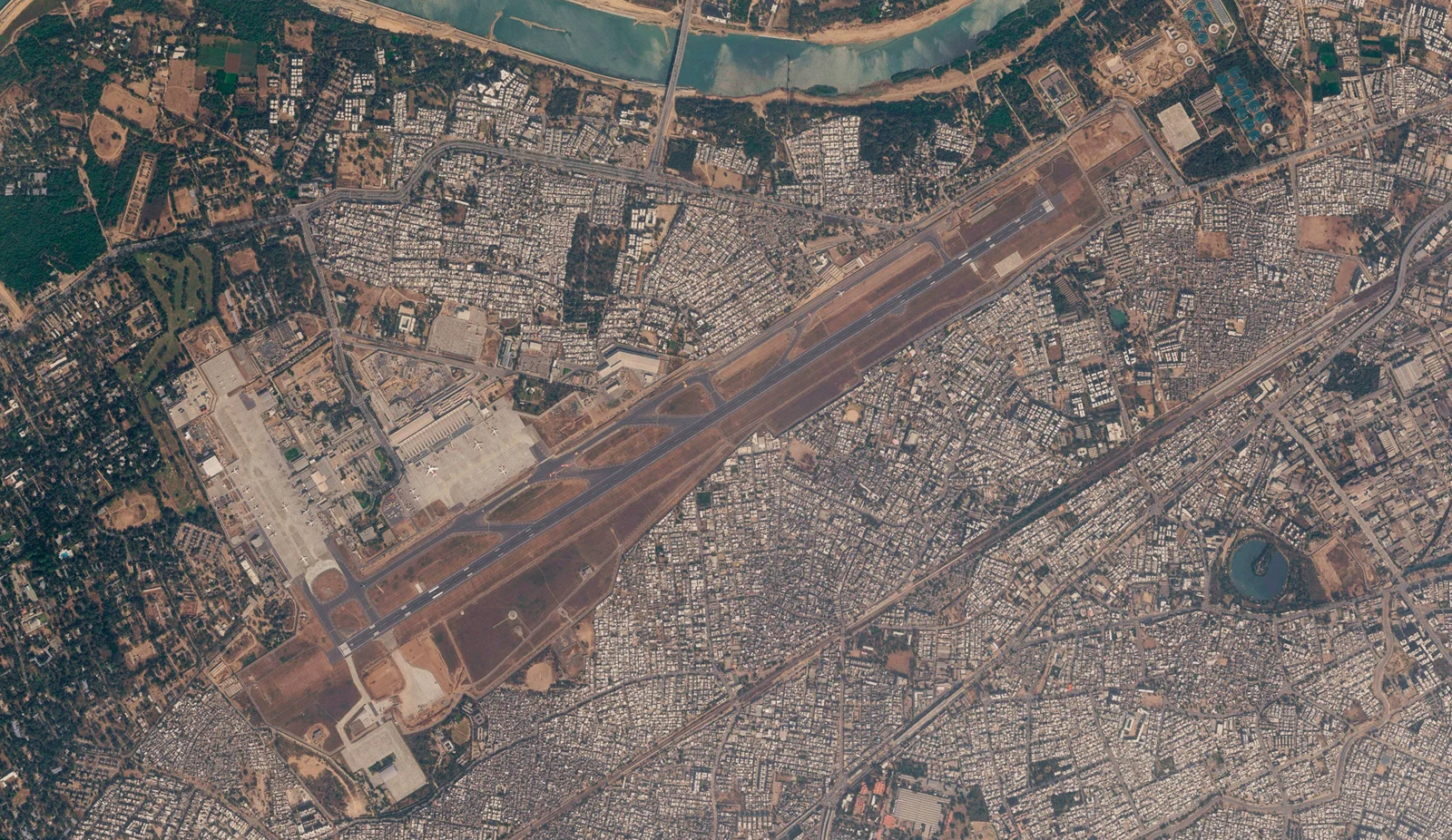
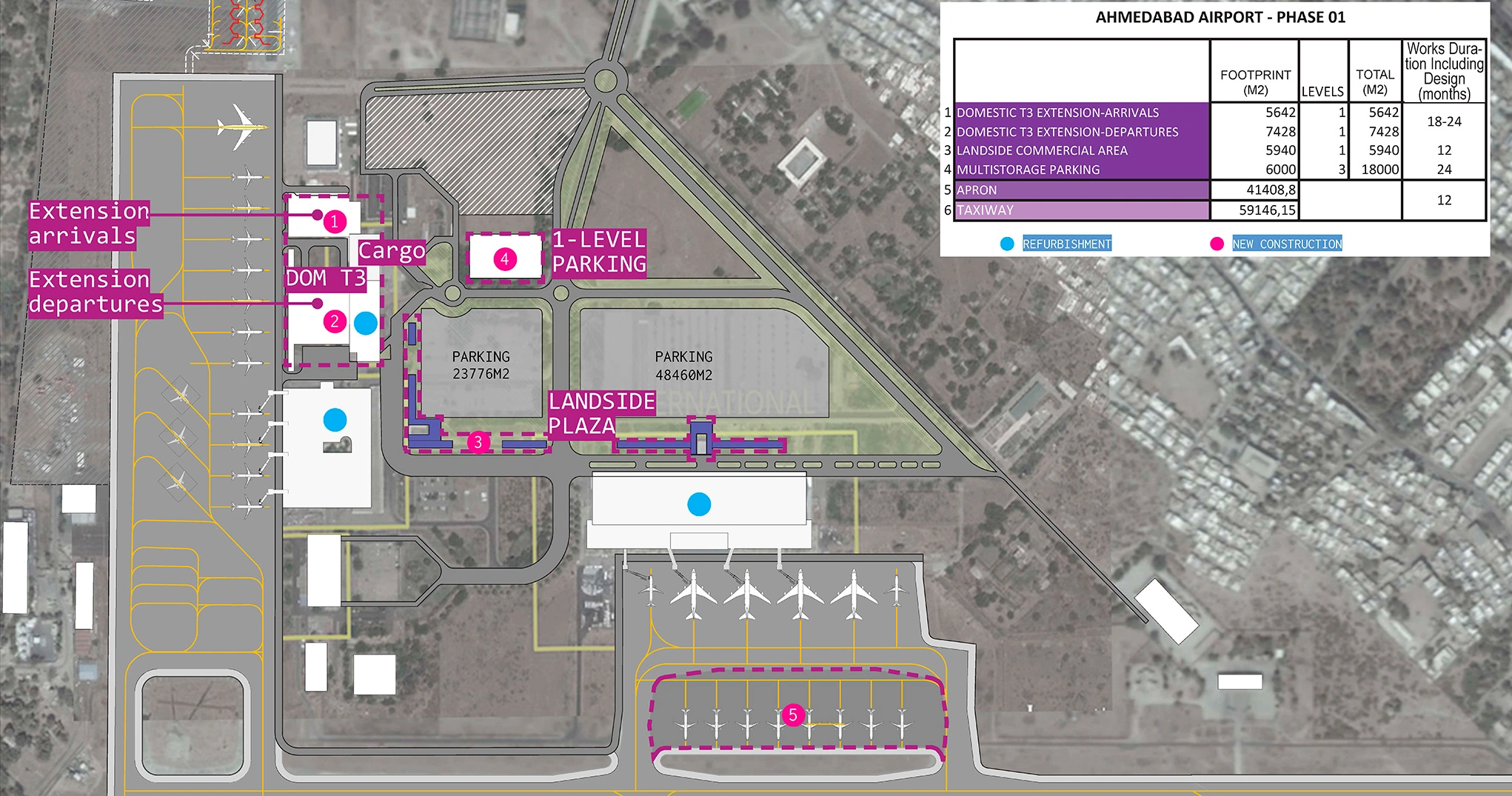
Commissioned by Vinci Airports, this project comprised a comprehensive feasibility study and territorial strategy for Ahmedabad Airport, with a focus on existing and future terminal operations and airside infrastructure. Developed in 2017, 1PAX acted as architect and strategic advisor, assessing airport capacity within a broader mobility and territorial context, aligned with projected growth to 35 million passengers per year.
Key Challenge
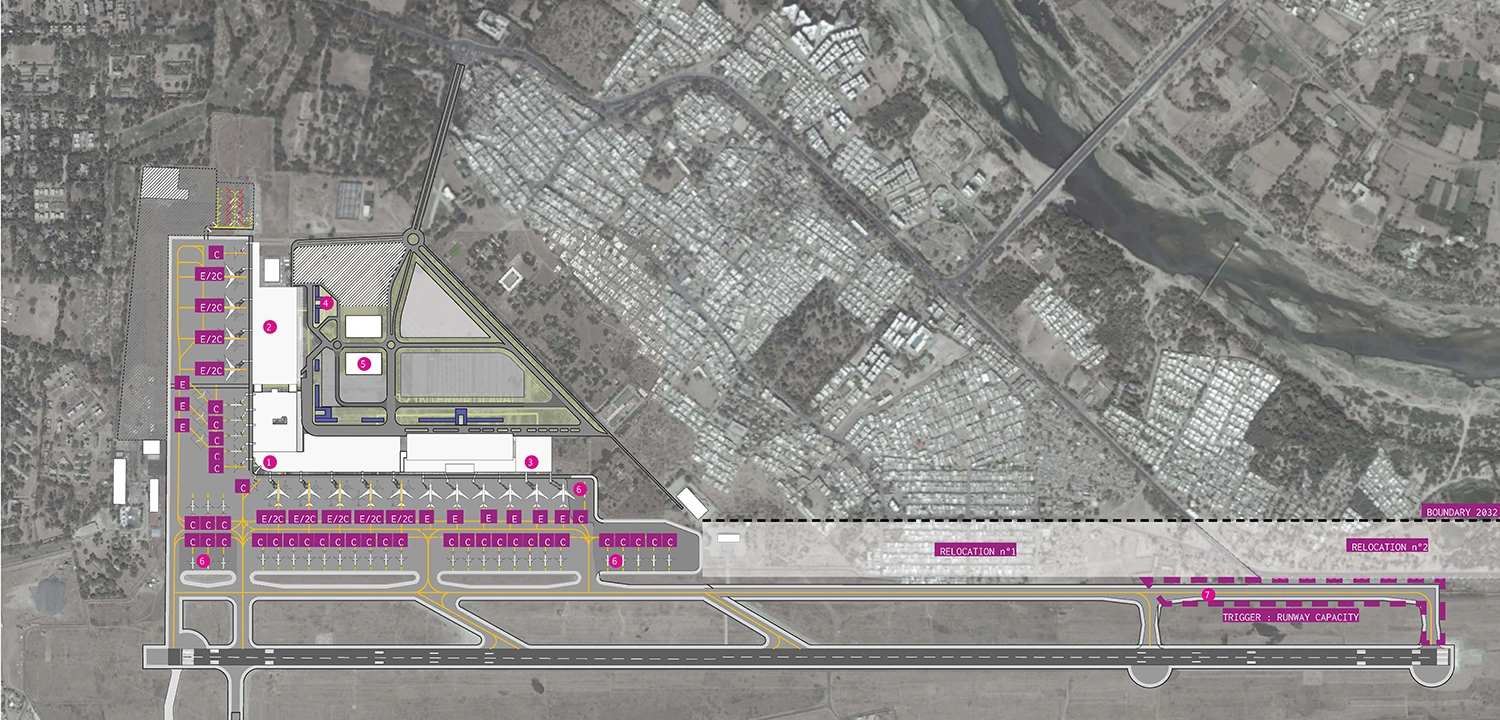
The primary challenge was addressing forecasted congestion risks linked to runway operations. With the majority of takeoffs and landings concentrated on a single runway configuration, the Airport Authority of India identified the need to extend the parallel taxiway system to safeguard operational efficiency in both the short and long term—without disrupting ongoing airport activity or compromising safety standards.
Our Approach
1PAX conducted an in-depth analysis of runway capacity and airside operations, considering existing configurations, traffic forecasts, and operational patterns. Particular attention was given to the design and positioning of rapid exit taxiways, the performance of Instrument Landing System (ILS) equipment, and the interface between runway movements and terminal operations.
The study established a phased strategy for extending the parallel taxiway, ensuring smoother aircraft circulation, reduced runway occupancy times, and improved resilience under peak demand scenarios. The approach balanced technical precision with a territorial vision, positioning airside upgrades as a catalyst for overall airport performance and future terminal development.