.svg)

A nation-wide transformation of airport infrastructure, redefining mobility through human-centered design, operational clarity, and a deep connection to place.
Value Delivered
Project Overview
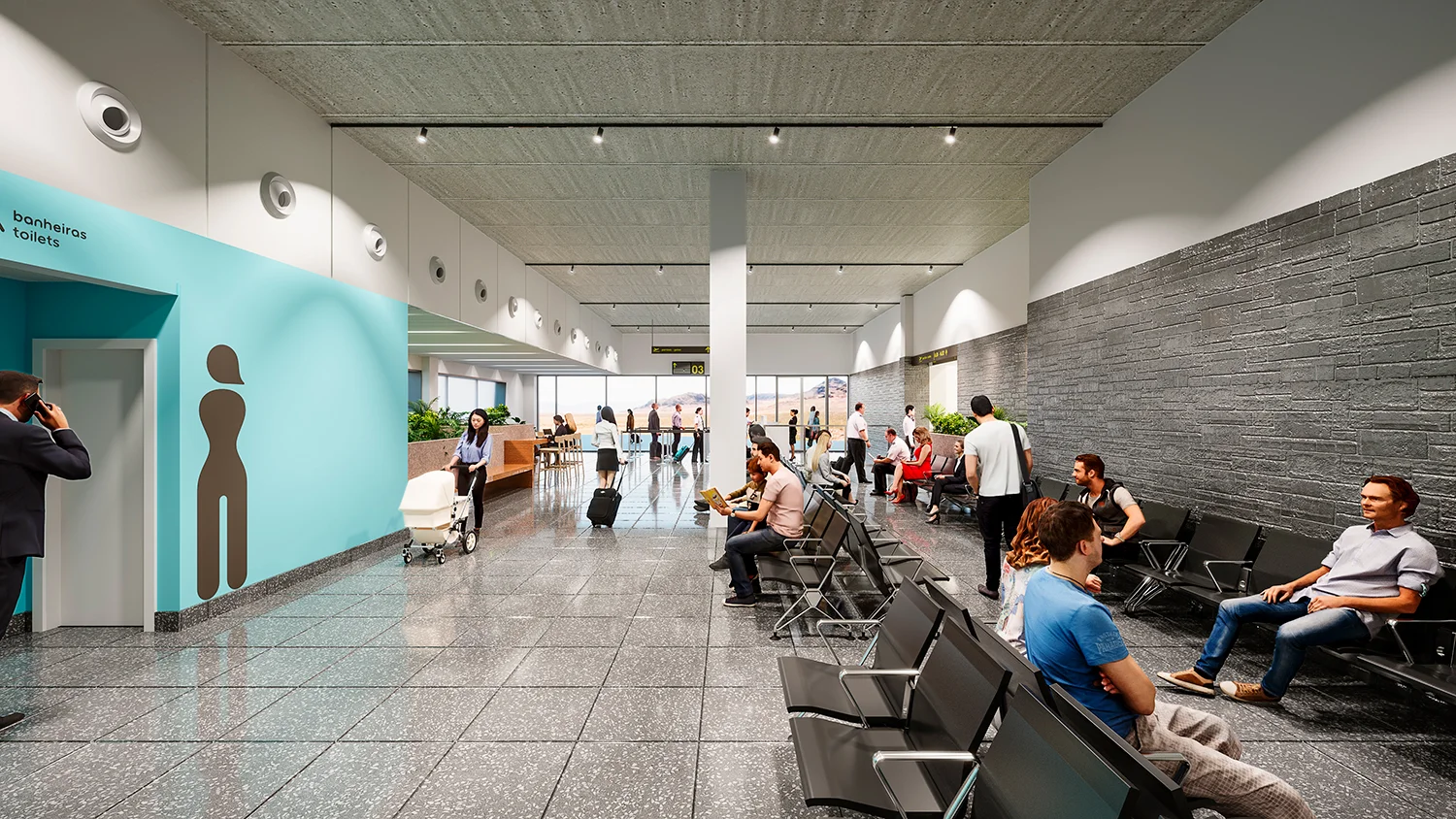
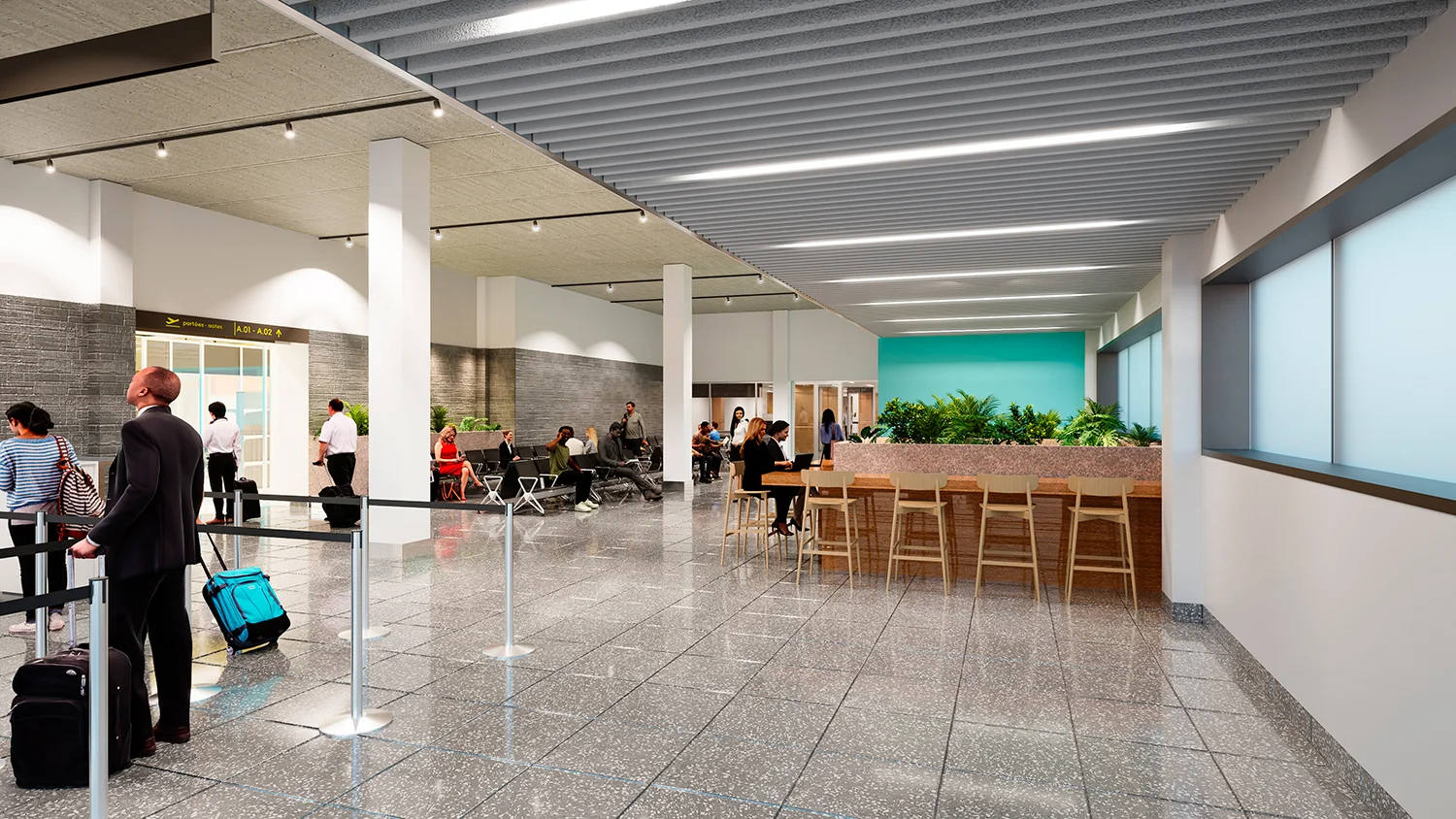
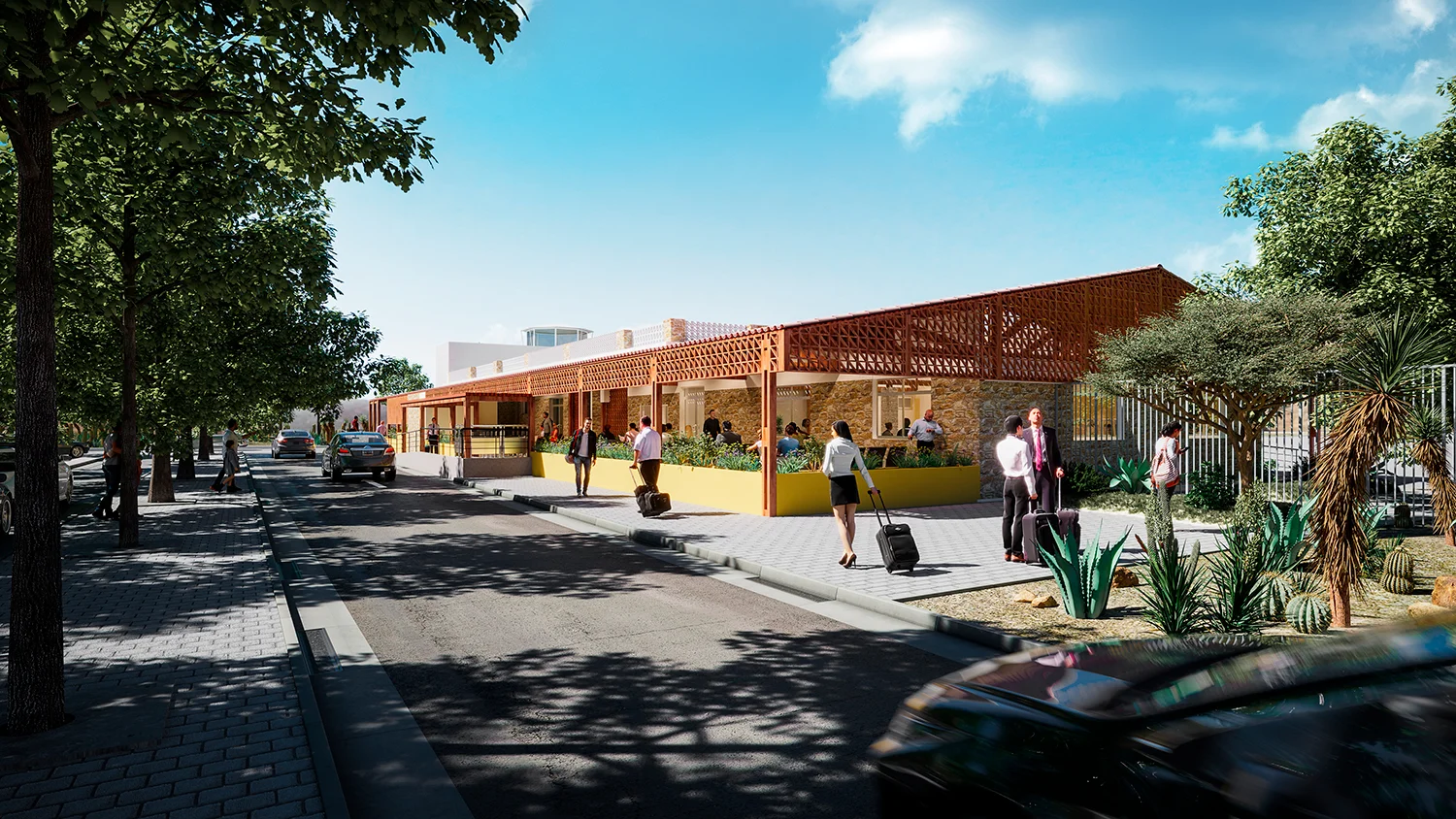
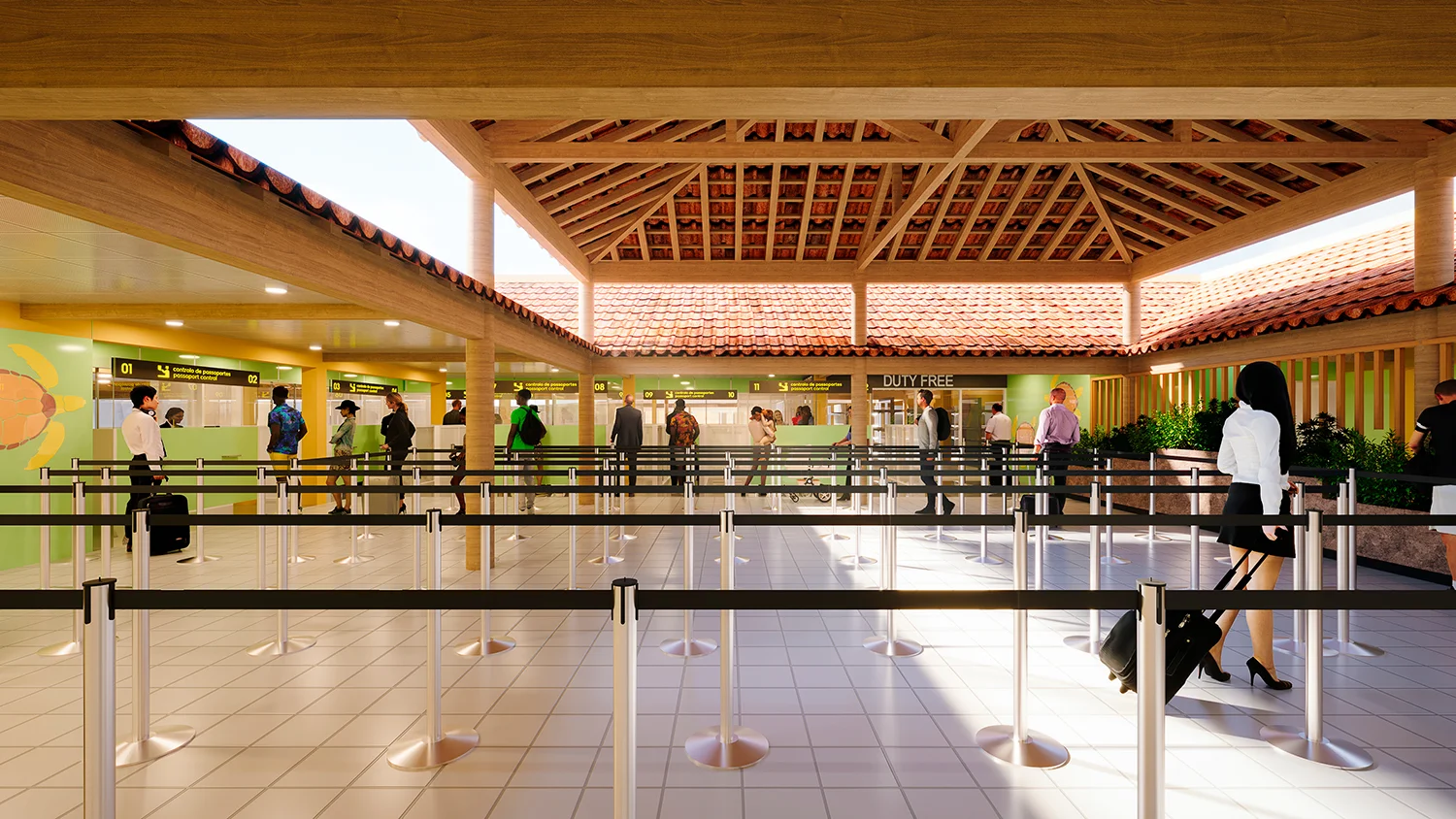
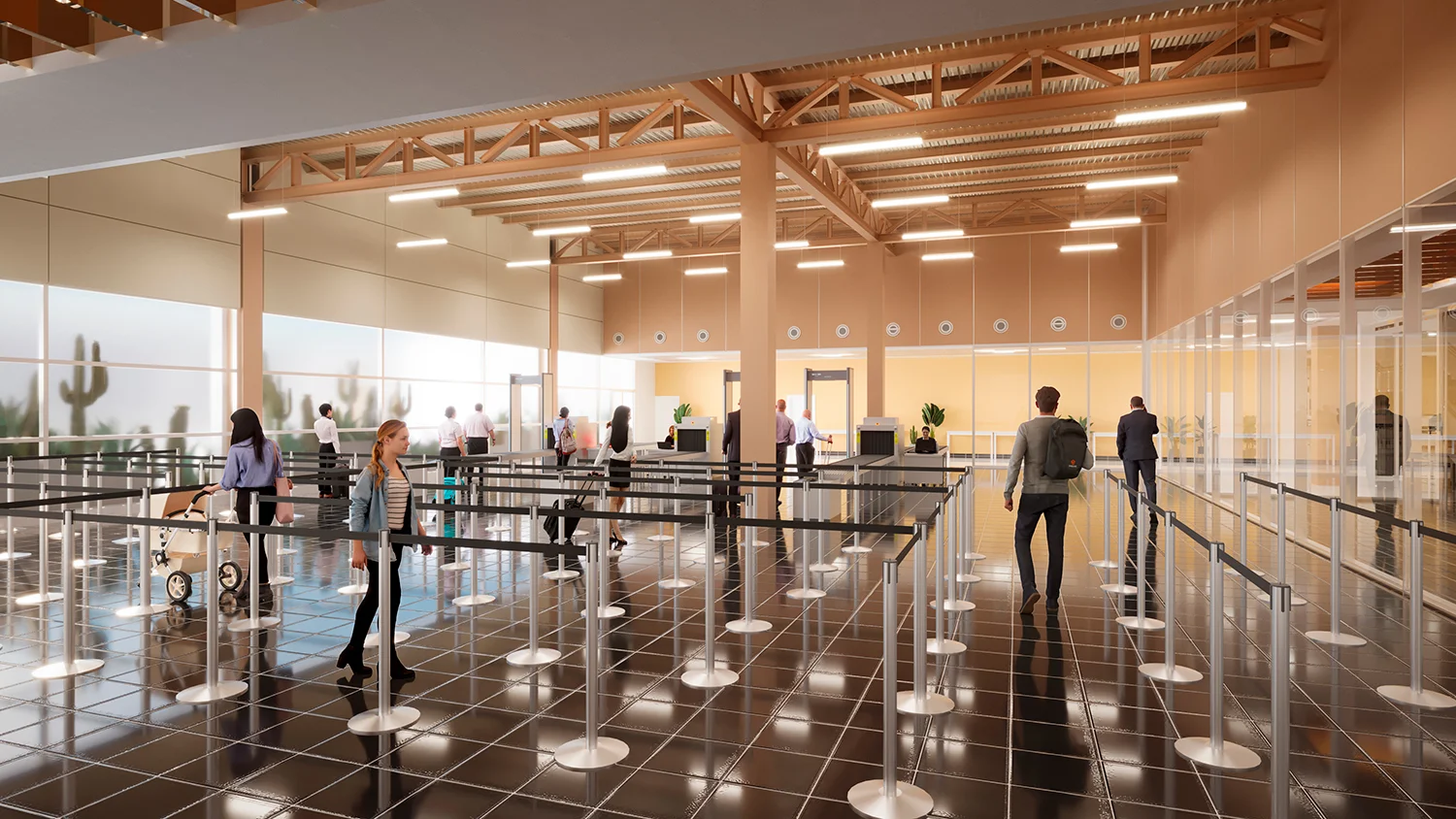
Phase 1B of the Cabo Verde Airports modernization program delivers a coordinated set of interventions across five key airports: Sal, Praia, Boa Vista, São Vicente, and Maio. The scope combines targeted expansions, large-scale refurbishments, landside reconfigurations, and the addition of new operational facilities. Each airport responds to its specific context—ranging from international tourism hubs to local community gateways—while collectively advancing capacity, efficiency, and passenger experience across the national network.
Key Challenge
Balancing diverse operational needs, site constraints, and passenger profiles across multiple islands, while maintaining continuous airport operations and ensuring a cohesive vision. The program required adapting to varying conditions—from spatial limitations and climatic exposure to logistical constraints and distinct cultural patterns of use—without imposing a one-size-fits-all solution.
Our Approach
The design strategy is rooted in a unified yet adaptable framework. Each airport is approached as a unique ecosystem, where interventions prioritize flow optimization, spatial clarity, and user comfort. Landside areas are reimagined to improve accessibility and safety, while terminal interiors are reorganized to enhance operational efficiency and passenger movement.
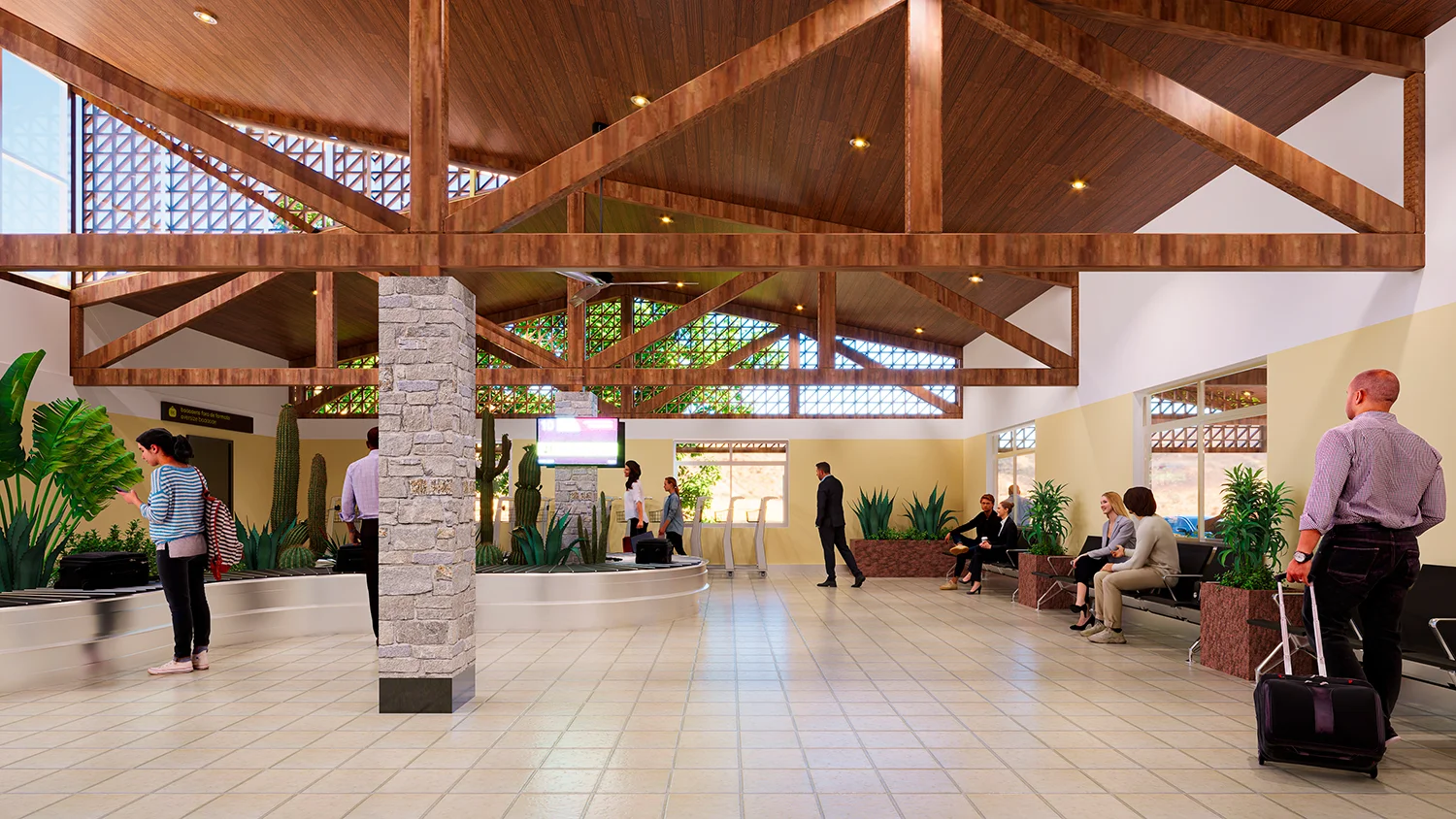
Passive, climate-responsive design principles are embedded throughout—maximizing natural ventilation, daylight, and shading to reduce environmental impact. Material choices emphasize local resources and cultural continuity, reinforcing identity across all sites. Where expansion is limited, spatial reconfiguration and flexible solutions—such as swing gates and modular structures—unlock new capacity within existing footprints.
Across all interventions, architecture acts as both infrastructure and experience: guiding movement, reducing friction, and creating intuitive, legible environments that respond to the human scale.
.svg)
.webp)
.webp)
.webp)
.webp)
.webp)